
Ask around any pickleball group about injuries and you'll hear the same story more than once: someone rolled an ankle planting hard for a wide dink, wearing running shoes. It's one of the most common and most preventable injuries in the sport, and it comes down to footwear.
Why running shoes aren't built for this
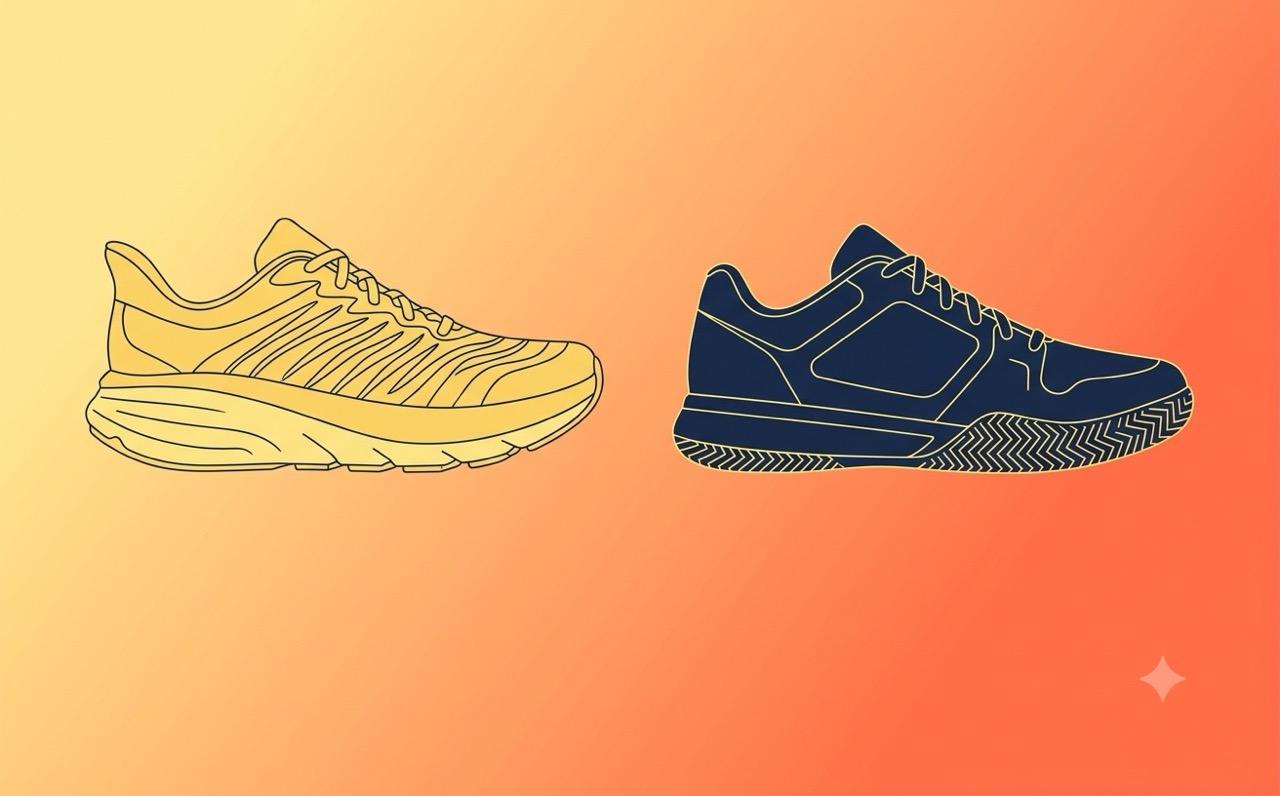
Running shoes are engineered for forward motion in a straight line. Pickleball is the opposite: constant lateral shuffling, hard stops, quick direction changes, and split-step recovery after every shot. Running shoes typically have:
- Soft, tall midsoles designed to absorb repeated forward impact — but that same softness makes them unstable when your foot rolls sideways under load.
- Minimal lateral support in the upper, since side-to-side stress isn't something running shoes are designed to resist.
- Outsoles optimized for straight-line traction, not the pivoting and shuffling that dominates court movement.
Wear running shoes on a court regularly and the risk isn't hypothetical — ankle sprains and rolled ankles are consistently among the most common pickleball injuries, and shoe choice is one of the few risk factors you fully control.
What to look for in a court shoe
Lateral stability
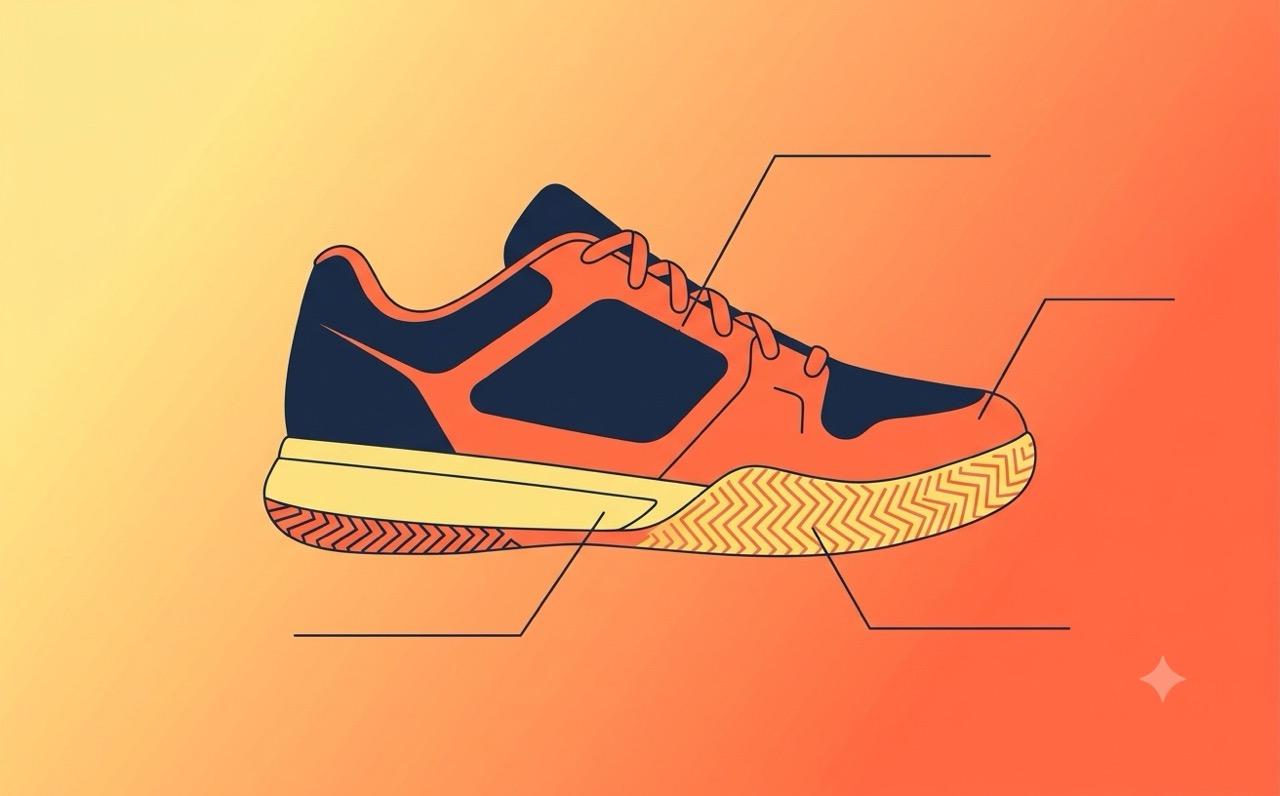
Look for a wider, flatter platform and a lower-to-the-ground midsole than a typical running shoe. Some court shoes include reinforced side panels or "outriggers" — small flares in the outsole under the arch — specifically to resist ankle roll during hard lateral pushes.
Outsole material and pattern
Court shoes (built for pickleball, tennis, volleyball, or basketball) use a non-marking, gum-rubber outsole with a multidirectional herringbone or pivot-point tread pattern. This is designed to grip during lateral movement and allow controlled pivoting rather than catching your foot mid-turn. If you're playing on outdoor asphalt or concrete courts, look specifically for a durable outsole rated for hard-court use — the softer gum rubber built for indoor gym floors wears down fast outdoors.
Cushioning and support
You want enough cushioning to absorb repeated stop-start impact over a long session, but not so much stack height that the shoe feels unstable underfoot. Most dedicated pickleball and court shoes land in a firmer, lower-profile range than running shoes for exactly this reason.
Fit
A snug, secure fit through the midfoot and heel matters more in a court shoe than in a running shoe, since your foot needs to stay locked in place during hard direction changes rather than sliding inside the shoe. Make sure there's still enough room in the toe box — repeated forward sliding into a cramped toe box on hard stops is a common source of black toenails and blisters.
Do you need a "pickleball shoe" specifically?
Not necessarily. Purpose-built pickleball court shoes are the safest default choice since they're designed around the sport's exact movement patterns, but a genuine tennis, volleyball, or indoor court shoe will cover the same fundamentals — lateral support, non-marking outsole, low-to-ground stability. What you want to avoid specifically is running shoes, cross-trainers built primarily for gym lifting, or casual sneakers with no lateral reinforcement.
When to replace them
Court shoes wear from the outside edges in, since that's where lateral pushes load the outsole. Once you see the tread pattern flattening at the outer edges, or you notice less "bite" when you plant for a wide shot, it's time to replace them — worn outsoles are almost as risky as the wrong shoe type in the first place. Most players playing multiple times a week get 4–6 months out of a pair before traction noticeably degrades.
Bottom line
Prioritize lateral stability, a non-marking multidirectional outsole, and a secure midfoot fit over cushioning alone. If you're currently playing in running shoes, this is the single cheapest upgrade you can make to reduce injury risk on the court.