
If you just picked up pickleball, the paddle wall at any sporting goods store (or the search results on Amazon) can be overwhelming. Paddles range from $30 starter sets to $250+ performance models, and the marketing copy on most of them doesn't explain what actually matters. Here's what does.
The three things that define a paddle
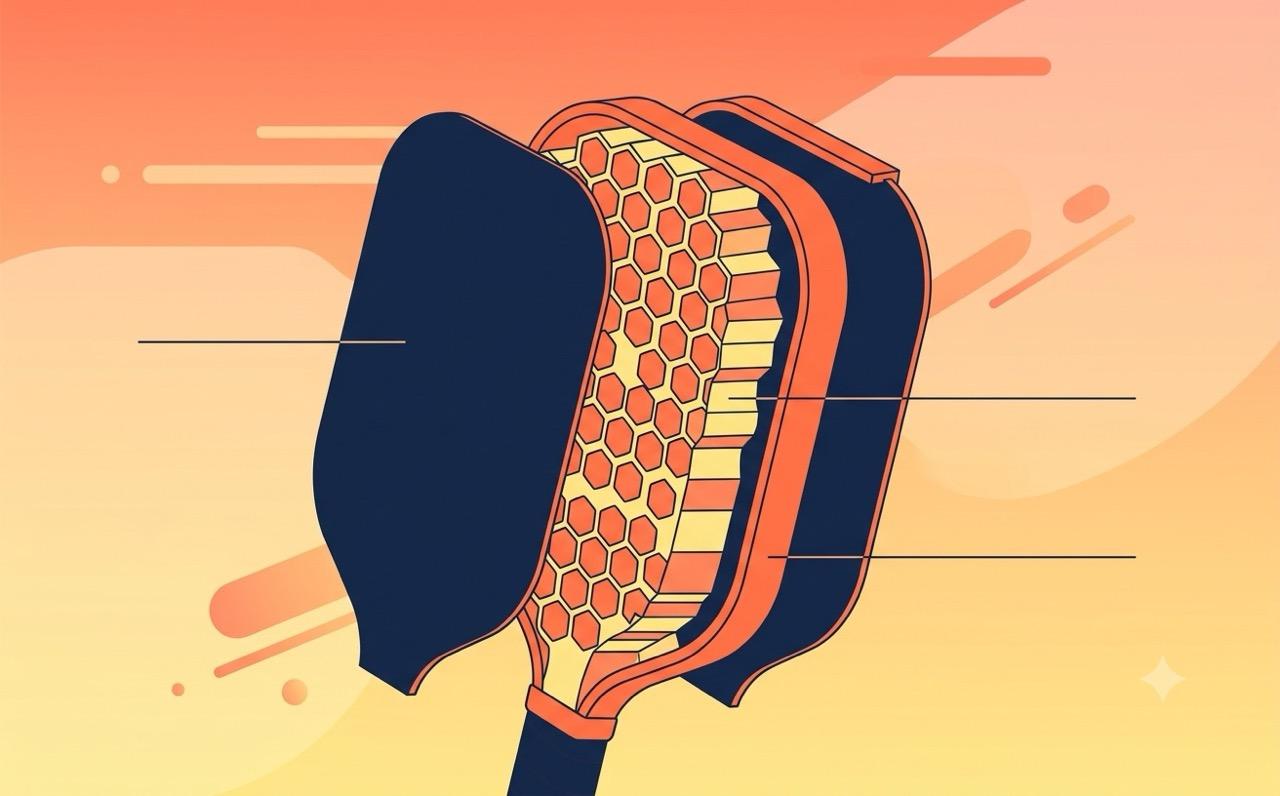
Every paddle is a combination of three variables: weight, core material, and face material. Everything else — shape, grip length, price — is secondary.
Weight
- Lightweight (under 7.3 oz): Easier on the arm and shoulder, faster hand speed at the net, but you'll feel more of the ball's pace come back at you. Good for players managing tennis elbow or shoulder issues.
- Midweight (7.3–8.4 oz): The sweet spot for most players. Enough mass to drive the ball, still maneuverable for reset shots and dinking.
- Heavyweight (8.5 oz+): More power with less swing effort, but slower to reposition for fast net exchanges. Less common in modern paddle lines as manufacturers shift power into face and core design instead of raw mass.
If you're not sure, start in the 7.5–8.0 oz range. You can always add or remove lead tape later to fine-tune.
Core material
The core is the material sandwiched inside the paddle face, and it's the single biggest factor in how a paddle feels:
- Polymer (polypropylene) honeycomb: The modern standard. Quiet, soft feel, good touch for dinking and resets. Most paddles from major brands use some version of this.
- Nomex: An older, harder core material — loud, stiff, and powerful, but less forgiving and less common on new paddles today.
- Aluminum honeycomb: Lightweight and consistent but generally lower power; mostly found on entry-level or control-first paddles.
Thicker polymer cores (16mm+) generally favor control and touch. Thinner cores (11–13mm) favor power and pop off the face.
Face material
- Fiberglass (composite): Softer feel, more forgiving, often cheaper. Good for beginners who want touch without a steep learning curve.
- Carbon fiber / graphite: Stiffer, more consistent power transfer, and generally the choice of intermediate-to-advanced players. Slightly less "give" on off-center hits.
Matching a paddle to your play style
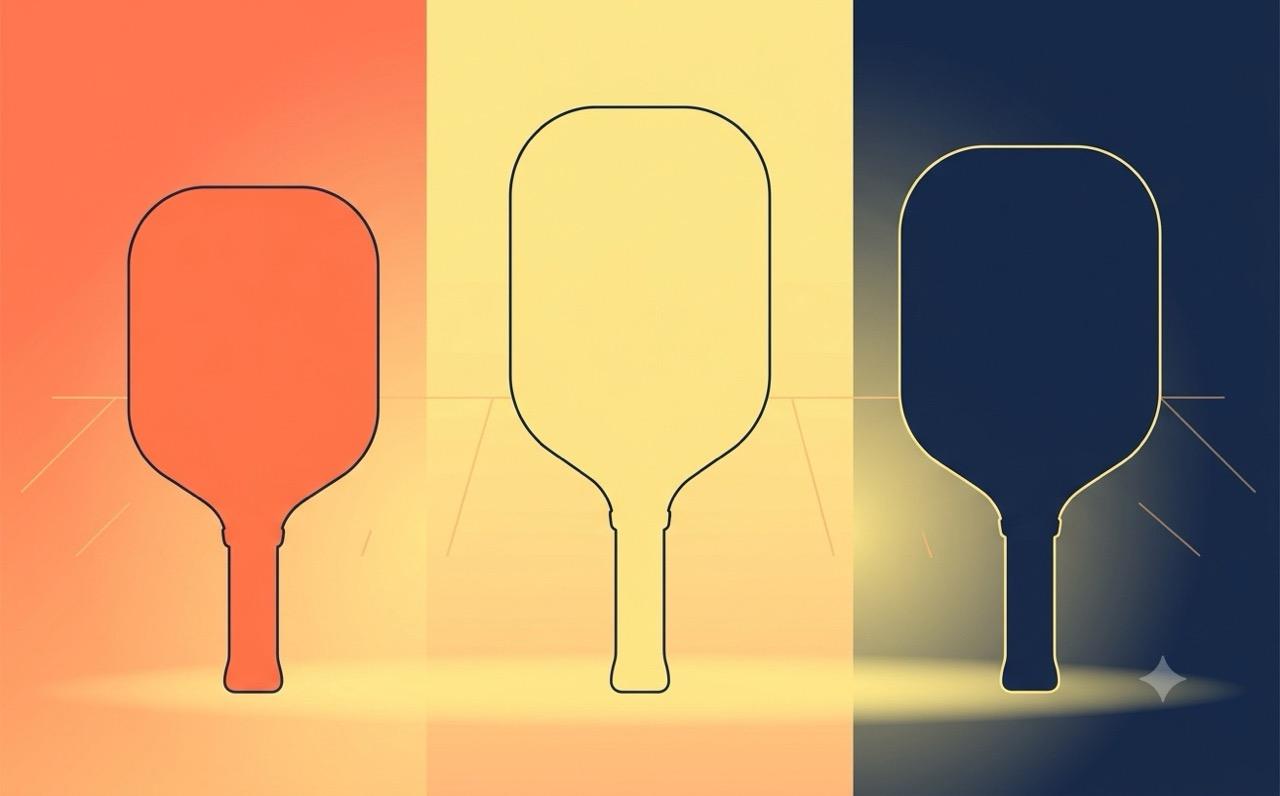
- New to racquet sports, want forgiveness and touch: a midweight paddle with a thicker polymer core and a fiberglass face.
- Coming from tennis, want pace and pop: a slightly heavier paddle with a carbon face and thinner core.
- Focused on dinking, resets, and soft game: a control-oriented, thicker-core paddle — this is where brands like Engage paddles built their reputation.
- Want an all-around performance paddle as you improve: mid-to-premium options from Selkirk or JOOLA cover a wide range of weight and core combinations across their lineups, so you can pick a specific model that matches the profile above rather than the brand alone.
Grip size and shape
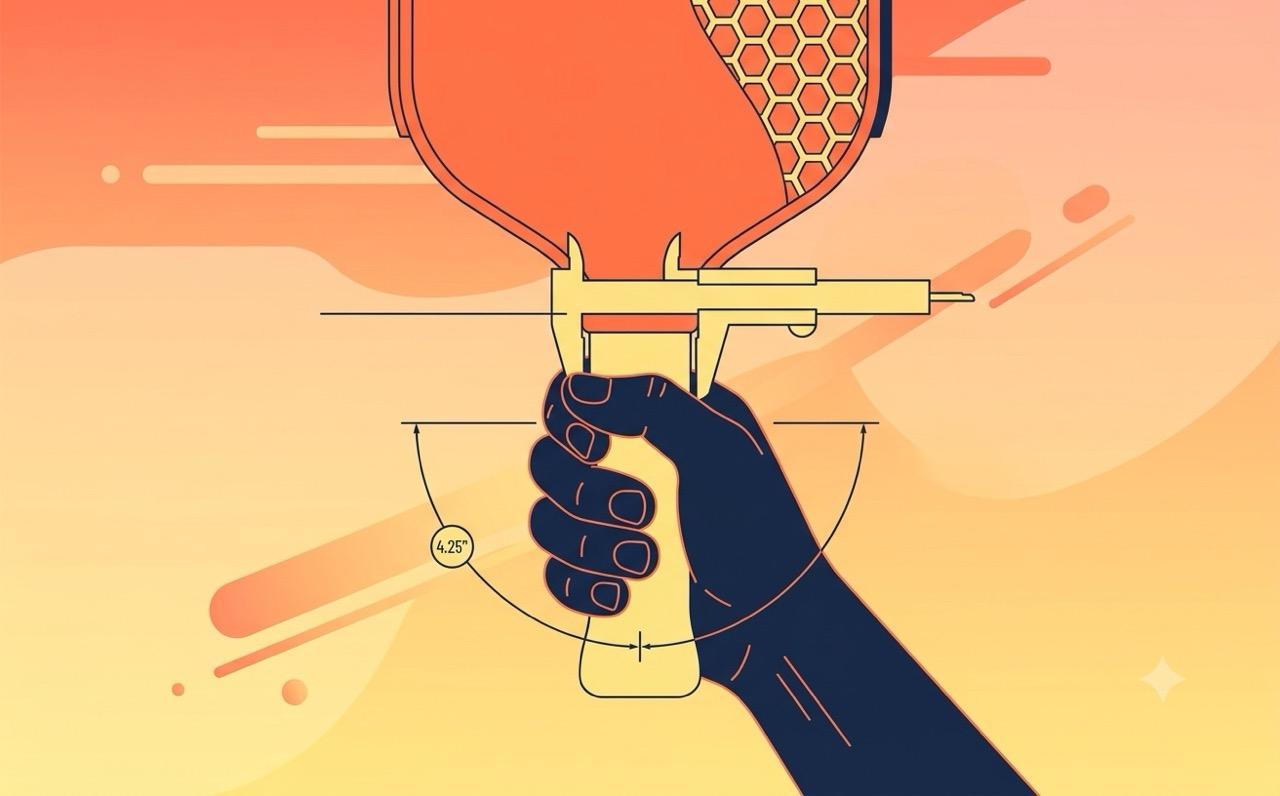
Grip circumference typically runs from about 4" to 4.5". Too big and you lose wrist snap for dinks and spin; too small and you'll grip tighter than you should, which fatigues your forearm faster. If you're between sizes, size down and build up with an overgrip — it's a $5 fix instead of a wrong paddle purchase.
Paddle shape matters too:
- Standard shape: Balanced sweet spot, easier to control.
- Elongated shape: More reach and a longer sweet spot for power, but a narrower face and a higher learning curve.
USA Pickleball approval
If you plan to play in sanctioned tournaments or leagues, check that any paddle you're considering appears on the USA Pickleball approved paddle list — manufacturers usually state this clearly on the product page. For casual and recreational play, this doesn't matter, but it's worth checking before you buy if competitive play is on your radar.
Don't overspend on your first paddle
A $60–100 fiberglass-face, polymer-core paddle from an established brand will teach you everything you need to know about your own preferences. Once you know whether you gravitate toward power or touch, a second paddle purchase in the $150+ range will be money much better spent than guessing right the first time.
Bottom line
- Midweight, thicker polymer core, fiberglass face = safest beginner combination.
- Grip size 4–4.25" for most adults; use an overgrip to fine-tune.
- Don't buy your "forever paddle" first — buy a good learning paddle, then upgrade once you know your style.